Introduction: Unlocking the True Potential of Your ASIC Miner
Mining of cryptocurrencies has developed much beyond the point of having a machine that is connected and left to work. The distinction between a lucrative business, and an investment that was a waste of time nowadays is often in firmware, the software that drives all your ASIC miner functions. As hardware takes the headlines in terms of hash rates and terahashes per second (TH/s), it is the firmware that has a quiet influence on efficiency, stability, security, and long-term reliability. To the miners in Europe and other parts of the world, firmware optimization has now taken the shape of a strategy that would maximize profit and minimize risk. Reliable vendors such as Mineshop.eu are more than just a supplier of the state-of-the-art ASIC miners, they also offer the resource and assistance to utilize the full potential of firmware.
Understanding ASIC Miner Firmware.
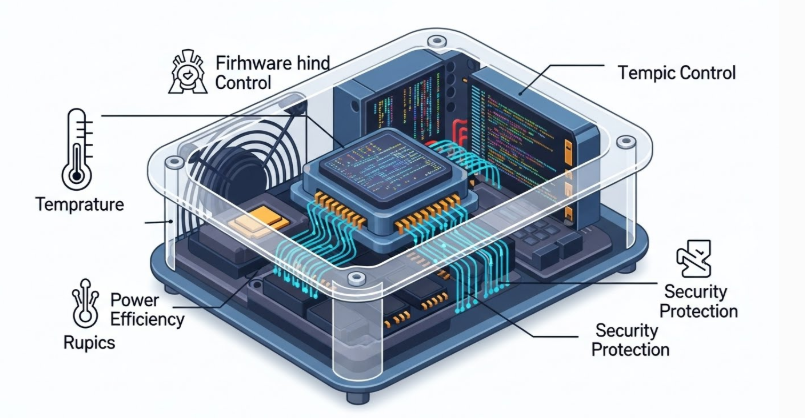
ASIC miners are dedicated hardware that is designed to perform particular cryptocurrency mining algorithms. They are not multitasking, as CPUs or GPUs do, but are made to do only one thing: hashing. Bitcoin ASIC runs on the SHA-256 algorithm and Litecoin and Dogecoin ASICs are operated on the Scrypt algorithm. Firmware is the brain of these miners, and it regulates the way of how chips communicate, manage the working loads, and the power and cooling. It determines the performance boundaries, stability of hash rate, power usage and error tolerance. Even the most sophisticated ASIC miner will not be able to run at a high level without optimized firmware.
The software is one thing but the firmware is another, as firmware has a direct influence on profitability. Optimized firmware is used to make sure that miners have consistent hash rates, despite severe changes in network difficulty. It also controls the power consumption to avoid thermal throttling and can also be fine-tuned to adjust voltages and frequency. This control is more economical in terms of efficiency per watt and extends hardware life and saves on maintenance costs. An example is the high-end Bitcoin miners such as the Antminer S21 XP Hydro which use the firmware to keep 473 TH/s with only 12 J/TH efficiency. Such accuracy guarantees that miners bring as much returns as possible and their energy expenses are controlled.

No comment